
Quick Summary
Selecting among different types of driveway gates requires evaluating property slope, vehicle turn radius, and regional climate conditions to prevent motor burnout and structural sagging. Matching swing or sliding mechanics with rust-resistant materials and properly rated operators ensures long-term reliability, a standard emphasized by the specialists at All Star Gate Repair Santa Clarita. Property owners will understand how to assess site geometry, compare hardware specifications, and schedule a free on-site consultation to choose the ideal automated gate system.
Types of Driveway Gates: How to Pick the Best System
Choosing the right automated driveway gate comes down to your property layout, your local weather conditions, and how much daily wear the system will handle. While style and curb appeal matter, gates are heavy structural and electrical systems. Sizing an operator incorrectly or picking a design that fights your driveway’s slope leads to sagging frames, burnt-out motors, and constant service calls. Planning around safety standards, grade changes, and climate stress, as specialists at All Star Gate Repair Santa Clarita emphasize, ensures your entry system runs dependably for years.[1]
Every setup requires proper hardware matching, solid post footings, and clean electrical work. Use this guide to evaluate swing vs. slide mechanics, material performance under heat and wind, and motor duty cycles for your property.
What to Check Before Choosing a Gate
Before ordering panels or digging post holes, take a hard look at your driveway geometry, soil conditions, and electrical layout. Getting these measurements right early prevents expensive structural adjustments later.
Driveway Width and Vehicle Turn Radius
Measure the clear opening width between posts, but also account for how vehicles approach the gate from the street. A narrow road requires a wider gate opening or a deeper setback so long trucks and SUVs can turn in without clipping the posts. For swing gates, verify that parked cars inside the driveway will not sit inside the gate’s travel arc.[3]
Slope, Incline, and Drainage
If your driveway slopes upward into the property, an inward-swinging gate will drag against the pavement before opening fully. You can install custom uphill hinges or reverse the swing outward (if local code and setback distances allow), but steep driveways are usually better served by sliding or cantilever gates anchored into deep concrete footings.
Microclimate Stress and Electrical Runs
Local weather places real physical stress on automated systems. High summer temperatures heat up metal frames and expand mechanical linkages, while valley or canyon winds create massive resistance on solid-panel gates. You also need to plan conduit runs for high-voltage power and low-voltage control lines before laying concrete or asphalt.
Step 1: Compare Swing vs. Sliding Gate Mechanics
Your driveway slope and available side clearance dictate whether a swing or slide system makes sense.
Single vs. Bi-Parting Swing Gates
Swing gates mount to vertical support posts and swing open like standard residential doors. A single-leaf gate is cost-effective for narrow openings (10 to 12 feet), but wide openings put massive torque on the hinge post. Bi-parting double gates split the total width across two panels. This cuts the swing radius in half, opens faster, and distributes wind resistance and mechanical load across two separate motor operators.
Tracked Sliding Gates
Tracked slide gates roll along an inverted V-track embedded in or bolted to a concrete grade beam across the driveway. They work well for wide openings and tight parking pads because they move laterally along the fence line instead of swinging into the driveway. However, they need regular upkeep to keep the ground track clear of gravel, dirt, and debris that can derail the rollers.
Cantilever Sliding Gates
Cantilever gates do not touch the ground inside the drive aisle. Instead, an extended counterbalance tail holds the gate suspended across the opening using heavy roller assemblies mounted to off-set concrete pads. Because they float clear of the ground, cantilever systems do not jam from loose gravel, shifting dirt, or uneven road surfaces. They require additional lateral fence line space to house the counterbalance frame.
| Feature | Bi-Parting Swing | V-Track Sliding | Cantilever Sliding |
|---|---|---|---|
| Slope Tolerance | Low (requires flat swing path) | Moderate | High |
| Wind Resistance | Moderate (higher motor strain) | High | High |
| Ground Track Upkeep | None | High (must stay clear of debris) | None (floats above ground) |
| Lateral Space Needed | None | Equal to opening width | Opening width plus counterbalance tail |
Best Options for Sloped Driveways
When dealing with significant grade changes, sliding gates avoid the mechanical binding that plagues swing models. Cantilever systems are especially effective on sloped approaches because the entire assembly stays level and elevated, preventing the bottom rail from bottoming out on high spots in the pavement.
Step 2: Select Materials Based on Weather and Maintenance
Need types of driveway gates?
We’re available now — call for a fast, free estimate.
Driveway gate materials affect weight, mechanical wear on the motor, and how well the structure handles environmental exposure.
| Material | Thermal Stability | Weight & Motor Load | Maintenance Level |
|---|---|---|---|
| Ornamental Steel | High (subject to thermal expansion) | Heavy (requires heavy-duty operator) | Moderate (needs paint/rust upkeep) |
| Powder-Coated Aluminum | High (no rust risk) | Light (reduces gearbox wear) | Low |
| Natural Wood / Composite | Variable (moisture and sun sensitive) | Heavy (retains moisture weight) | Moderate to High |
Wrought Iron and Heavy Steel
Welded steel and wrought iron provide high structural strength and security. The trade-off is weight. Steel gates demand heavy-gauge steel support posts set deep in concrete, heavy ball-bearing hinges, and higher-horsepower operators. In areas with high summer heat, steel expands, which can cause latch pins and magnetic locks to bind if clearances are too tight.
Powder-Coated Aluminum
Aluminum is significantly lighter than steel and does not rust. This lighter profile places less stress on operator gearboxes, internal limit switches, and structural hinges. For automated systems cycling multiple times a day, aluminum provides dependable service life with low maintenance requirements.
Natural Wood and Composite Infills
Wood gates offer complete visual privacy and a classic look, but solid wood panels act like sails in heavy wind. They also absorb moisture during wet seasons and bake under direct sun, leading to warpage, sagging joints, and added motor drag. If you want a wood aesthetic, mount composite or sealed wood boards inside a rigid, welded steel or aluminum frame to prevent twisting.
Step 3: Match the Gate Operator to Daily Usage
Undersizing a gate motor is the fastest way to cause premature electrical failure. Operators are rated by horsepower, maximum gate length, leaf weight, and continuous duty cycles.
Linear Actuators vs. Articulated Arm Operators
Linear actuators use an internal screw drive or hydraulic cylinder in a slim housing to push and pull swing gates. They mount cleanly between the post and gate frame. If you have wide masonry or stone pillars, linear arms can bind against the corner of the post; articulated arm operators use a two-piece jointed mechanical arm that reaches around wide pillars to swing the gate smoothly.
Slide Gate Chain and Rack Drives
Sliding gates use either roller chain drives or direct rack-and-pinion gear systems. For residential applications with lighter aluminum panels, high-torque 24V DC motors with battery backup deliver quiet operation and soft start-and-stop profiles that protect internal gearboxes from mechanical shock.
Operator Types Overview
| Operator Type | Typical Application | Key Benefit |
|---|---|---|
| Linear Actuator | Standard residential swing gates | Clean look and direct push-pull control |
| Articulated Arm | Swing gates on wide brick/stone pillars | Articulated reach clears post offsets |
| Commercial Slide Drive | Heavy slide gates and high-cycle entries | Continuous-duty gearboxes and heavy roller chain |
| Solar-Powered Operator | Long driveways without trench power | Low-voltage draw with deep-cycle battery banks |
Step 4: Choose Hardware That Prevents Gate Sag
A gate is only as reliable as the hardware holding it off the ground. When hardware flexes or binds, the motor has to work twice as hard to push the gate.
Heavy-Duty Ball-Bearing Hinges
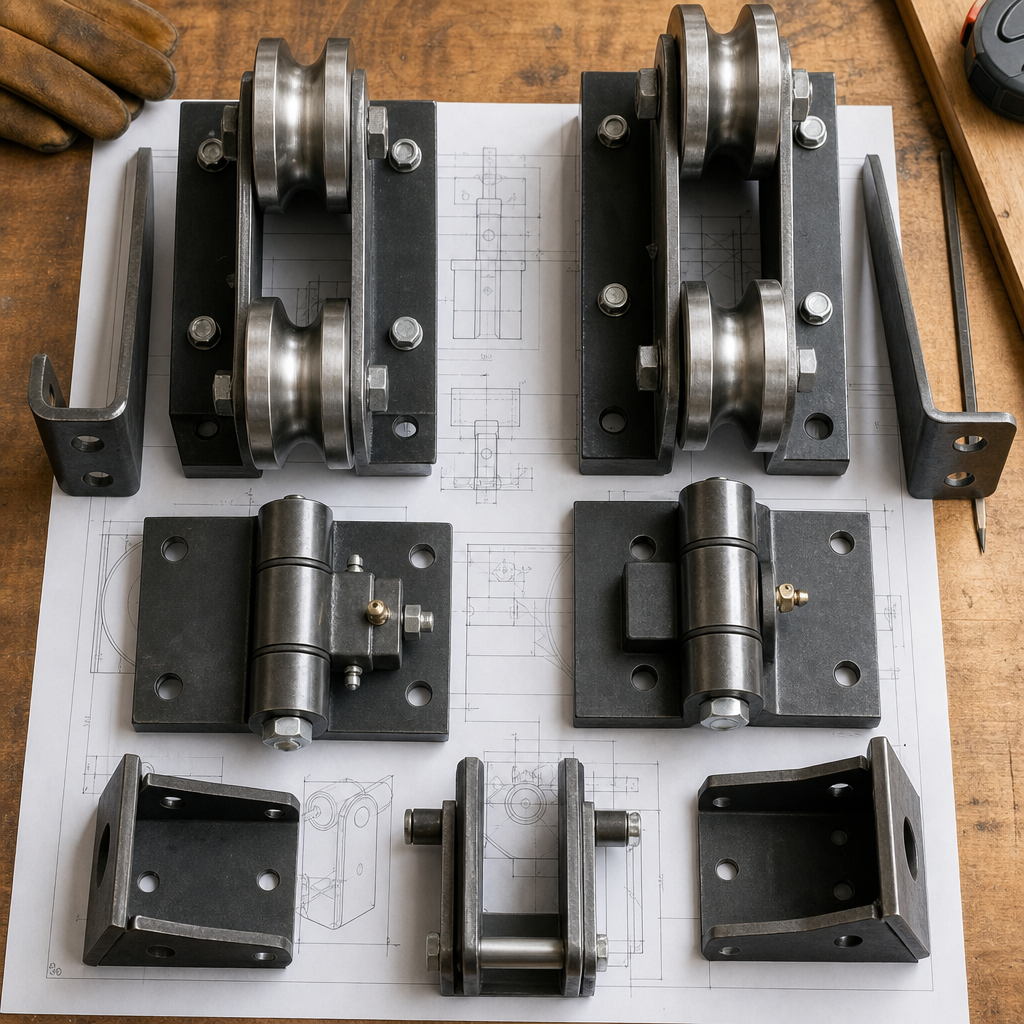
Avoid standard barrel hinges on automated gates. Use greaseable, sealed ball-bearing hinges rated well above the actual weight of the gate leaf. Ball-bearing assemblies reduce mechanical friction, keep the gate level, and eliminate the post-sag that causes automatic latching hardware to miss its target.
V-Groove Wheels and Internal Guide Rollers
For tracked sliding gates, machined steel or UHMW poly wheels with sealed bearings prevent squealing and track binding. Pair them with top guide rollers mounted inside an enclosed channel bracket to keep the gate upright through high-wind gusts.
Spring Counterbalances and Torsion Assemblies
Some custom lift or heavy swing setups use spring assists. In areas with dramatic seasonal temperature shifts, springs expand and contract, changing baseline tension. According to All Star Gate Repair Santa Clarita, regular tune-ups ensure counterbalance systems stay balanced without overloading motor limits.
Step 5: Safety Devices and Access Controls
Need types of driveway gates?
We’re available now — call for a fast, free estimate.
Modern automated gates must protect vehicles, pets, and pedestrians from entrapment. Safe operation relies on multiple layers of monitored detection.
Entrapment Protection and Safety Standards
Under standard safety guidance, automated vehicular gates should incorporate primary and secondary entrapment protection devices. These commonly include monitored infrared photo-eyes that project an invisible light beam across the driveway, as well as contact safety edges along the leading edge of the gate that stop or reverse movement if an obstruction is encountered.
Vehicle Detection Loops
In-ground inductive loops cut into the concrete or asphalt sense the metal mass of approaching vehicles. Exit loops open the gate automatically as you leave, while safety/reversing loops prevent the gate from closing while a car sits directly in the path of travel.
Keypads, Telephone Entry, and Smart Controls
Choose entry hardware built to withstand outdoor exposure. Weather-sealed telephone entry systems, hardwired digital keypads, and Wi-Fi or cellular-connected access modules let you grant guest access, monitor gate status, and open the gate remotely from a smartphone.
What Drives Gate Installation and Repair Costs?
Total project pricing depends on site preparation, electrical infrastructure, panel materials, and motor hardware.
Cost Drivers for Driveway Gate Systems
| Service / Component | Primary Cost Drivers |
|---|---|
| Diagnostic Inspection | Electrical complexity and access equipment |
| Structural Hinge & Post Welding | Leaf weight, post reinforcement, and material type |
| Track & Roller Replacement | Grade beam condition, track length, and roller rating |
| Motor Replacement | Horsepower, duty cycle, DC vs. AC, and power source |
| Complete Automated Installation | Trenching distance, gate material, access control, and safety loops |
Trenching power lines across finished concrete driveways adds labor and material expense. Choosing solar-compatible low-voltage operators can reduce trenching costs on long, rural driveways where running 120V AC lines from the main breaker is impractical.
Frequently Asked Questions
What are the most popular types of driveway gates?
The two primary categories are swing gates (single or bi-parting) and sliding gates (V-track or cantilever). Bi-parting swing gates are standard for flat residential properties, while sliding gates are common for wide entrances, short driveways, and sloped terrain.
What is the difference between sliding and swing driveway gates?
Swing gates open inward or outward on side-mounted hinges, requiring a clear, level arc of space inside the driveway. Sliding gates roll or float laterally along an adjacent fence line, requiring side runout space but no driveway depth.
Which driveway gate material lasts the longest?
Powder-coated aluminum is among the most durable low-maintenance materials because it resists rust and rot, and its lighter weight helps reduce long-term motor strain. Heavy-gauge galvanized steel is also durable when properly prepped and coated against rust.
What type of driveway gate works best for sloped driveways?
Cantilever and V-track sliding gates handle sloped ground best because they move horizontally across the opening instead of swinging uphill into the pavement grade.
Are automatic driveway gates better than manual gates?
Automatic gates provide security and convenience, allowing access without exiting your vehicle. They require professional installation, electrical power, and monitored safety sensors to operate safely according to building codes.[2]
What credentials should an automatic gate technician have?
Look for licensed, insured technicians, such as the team at All Star Gate Repair Santa Clarita, with verified experience in low-voltage electrical controls, structural welding, and automated safety standards. Certified technicians carry original equipment manufacturer (OEM) replacement parts and back their repairs with clear warranties.
Need types of driveway gates?
We’re available now — call for a fast, free estimate.
Sources
- UL 325 Safety Standards – Resources Hub – usautomaticgateopeners.com (2018)
- About The UL 325 Safety Standard for Gate Operators – engineeringexpress.com (2020)
- Which Type of Gate to Choose | CAD60 Guide | CAD60 – cad60.com
Related reading: Electric Driveway Gate Installation – 10% Off & Free Estimate – Same-Day Service
Related reading: Electric Driveway Gate Prices – Call Now-10% Off – Same-Day Service – Free Estimate
Frequently Asked Questions
How much lateral space is required along the fence line to install a cantilever sliding gate?
A cantilever sliding gate typically requires clear horizontal space equal to the driveway opening width plus an additional 30 to 50 percent for the counterbalance tail frame. If your property line lacks this extended runout space, All Star Gate Repair Santa Clarita can assess whether a V-track slider or bi-parting swing setup better suits your layout.
How do high canyon winds and extreme summer heat affect the choice between solid privacy gates and open-slat designs?
Solid privacy panels catch wind like a sail, creating severe lateral torque that can trip motor safety limits and bend structural hinges. In windy or hot microclimates, open-slat or ornamental designs allow airflow to pass freely while reducing heat absorption and thermal expansion on latch mechanisms.
How do I know if my gate needs an articulated arm operator instead of a linear actuator?
Linear actuators require a straight pull path and work best when gates mount onto standard steel or narrow wood posts. If your gate hinges to wide masonry, brick, or stone pillars, an articulated arm operator is required to reach around the deep pillar offset without binding against the corner.
About the author
 |
Marcus Dalton Marcus Dalton is a licensed gate repair technician with over a decade of experience serving the Santa Clarita Valley. He holds an associate degree in Electrical Engineering Technology from College of the Canyons and specializes in emergency motor replacements and automated access control systems. Marcus is dedicated to providing homeowners and property managers with practical advice on maintaining secure, reliable entry systems. |
Gate not opening, off track, or opener dead?
We’re available now — call for a fast, free estimate.
Call Now - Free Estimate